
Systems fragmentation
Nothing moves until you personally touch it. Systems is the domain where the business never got built to run without you, so every hire adds a layer of questions instead of taking weight off, and it gets blamed on the team instead of the structure.
Does this sound like your business?
- Nothing moves until you personally approve it, even the small decisions.
- You’re the only one who actually knows how half your processes work.
- Hiring hasn’t reduced your workload, it’s added a layer of questions you have to answer.
- If you took a week off, nothing would break loudly, it would just quietly stall.
- You’ve said “it’s just faster if I do it myself” at least once this week.
Three or more and Systems is where to start. The Scorecard tells you how deep it goes; the Playbook tells you what to do about it.
Two tools, one correction
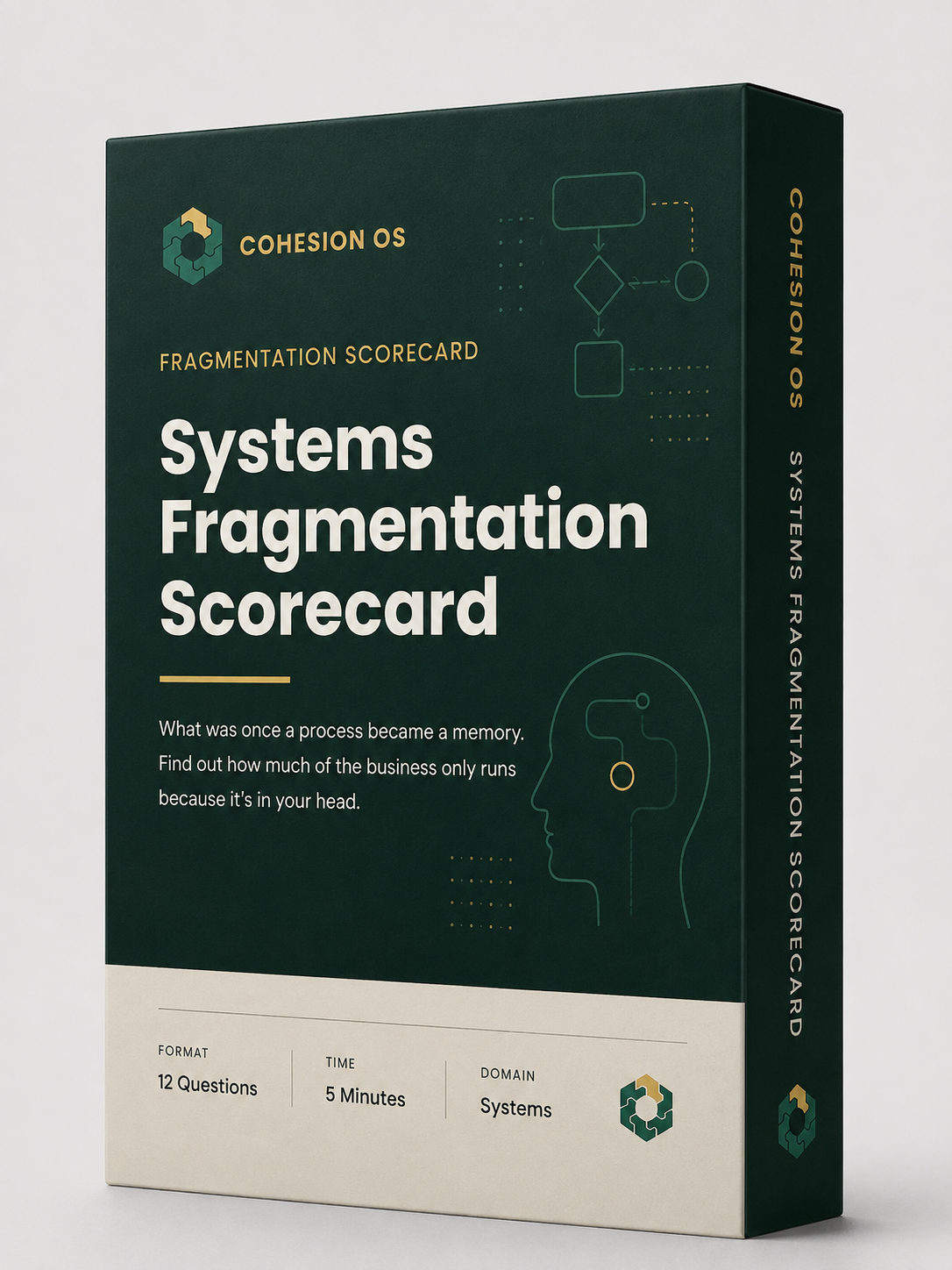
Systems Scorecard
A structured self-assessment that scores how dependent the business is on you personally, where the founder dependency is worst, and which fracture to close first.
- Scored diagnostic across the Systems sub-domains
- Severity band with what each band means in practice
- Your first correction point, named
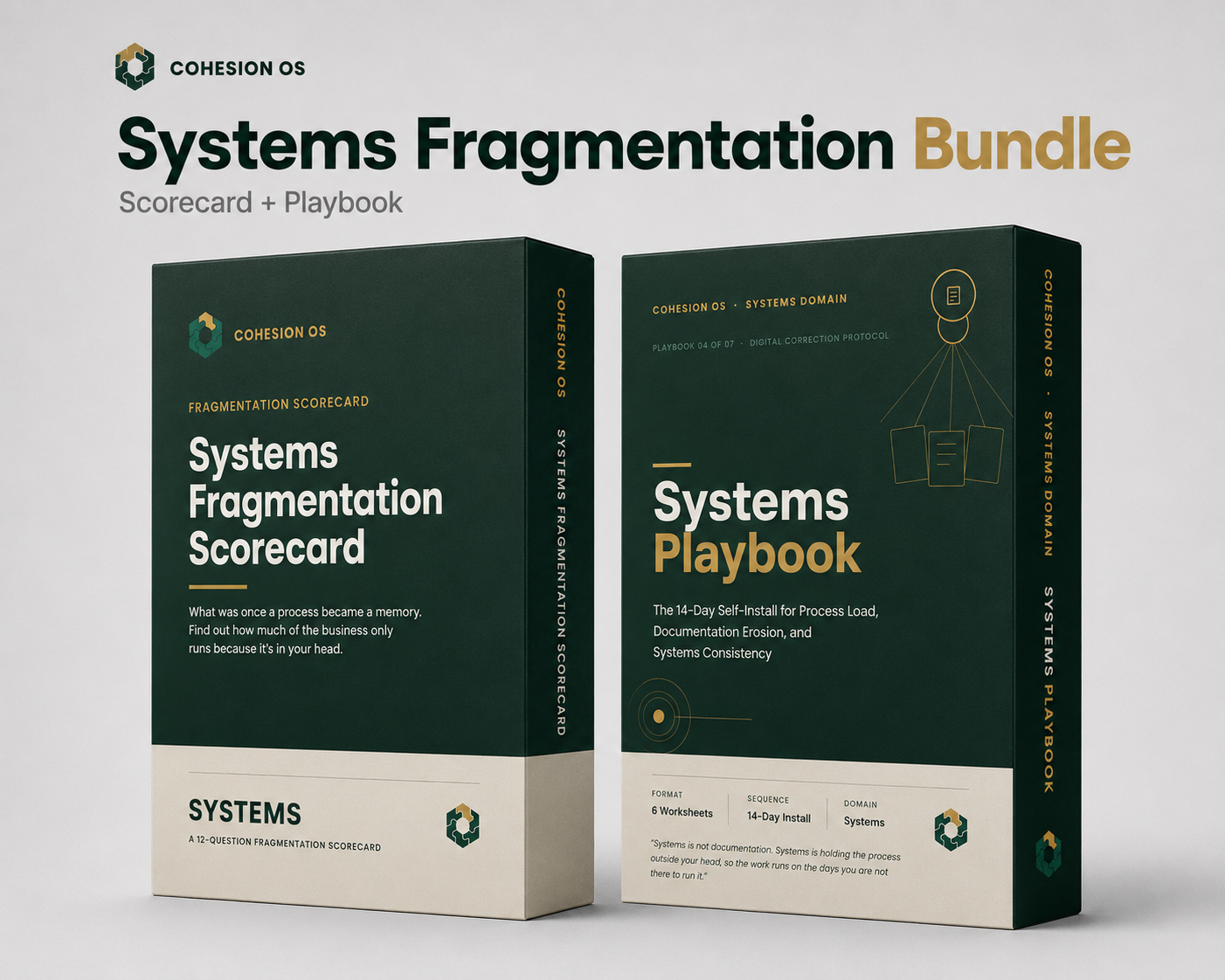
Systems Bundle
Scorecard and Playbook together. Run the diagnosis, then move straight into the correction without buying twice.
- Systems Scorecard
- Systems Playbook
- Everything in both, nothing extra to buy
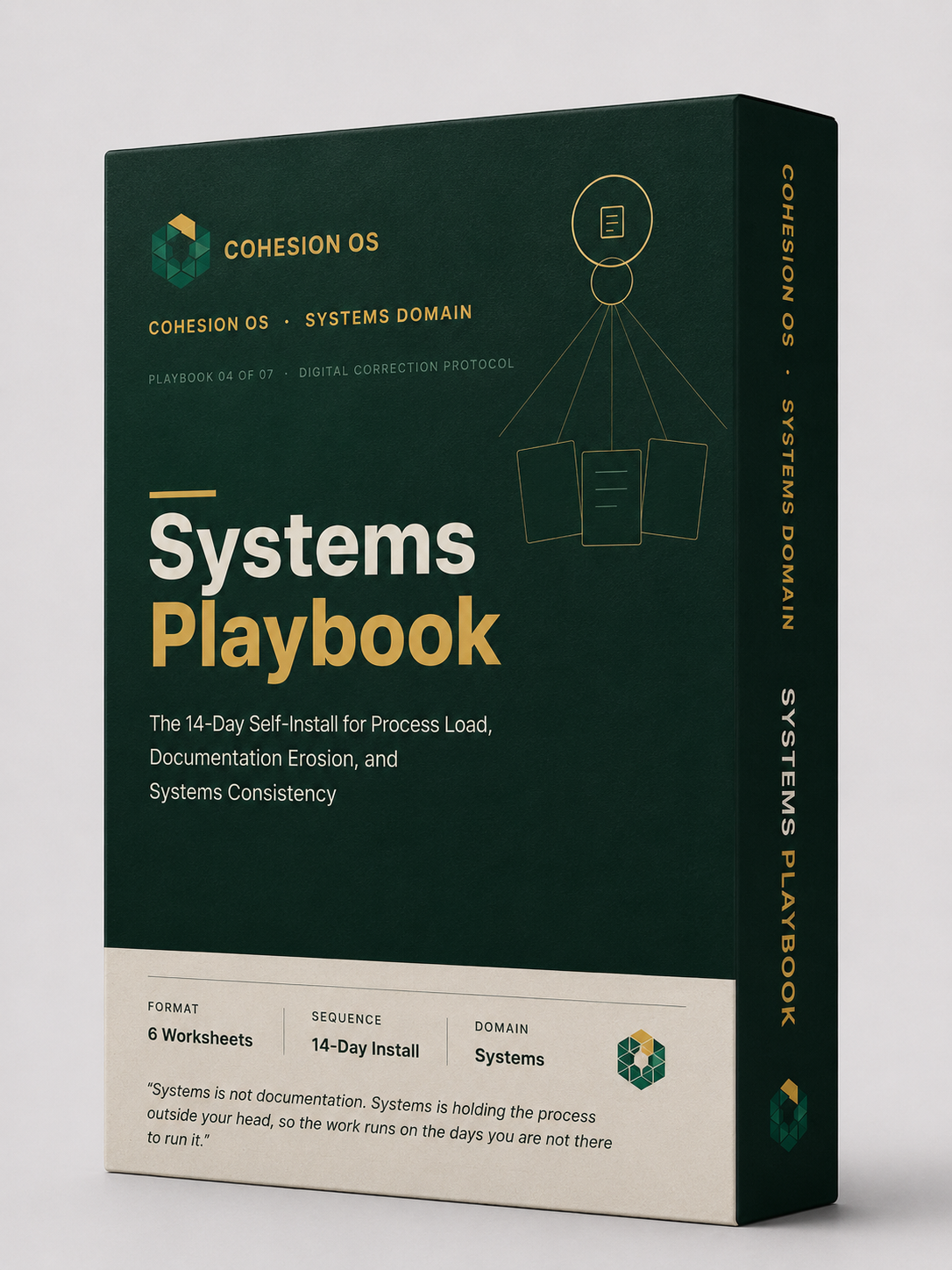
Systems Playbook
The structural fix. Not another hire, but a rebuild of the operating layer so decisions and processes route through the business instead of through you.
- Step-by-step correction sequence
- Templates to install the new systems structure
- What to do when it starts slipping
Where this sits in the system
Fragmentation relocates. Check the other six.
Fixing Systems without looking at the rest usually moves the load somewhere else. These are the domains it most often moves to.
Or take all seven at once
Every Scorecard and every Playbook. The full diagnostic and correction system, so fragmentation has nowhere left to relocate to.